

Eternal Silence
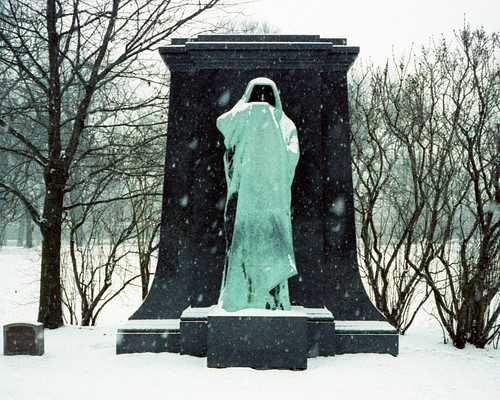
Located in Chicago, the sprawling Graceland Cemetery and Arboretum is home to a remarkable collection of statues and memorials. Among them stand the ambitious Greek Temple of Potter & Bertha Palmer, Marshall Field’s haunting figure of Memory, and the striking fusion of Egyptian form and Victorian artistry found in Schoenhofen’s Pyramid. Yet none command quite the same attention—or stir such quiet unease—as the enigmatic and foreboding statue known as “Eternal Silence.” Affectionately referred to by many as The Statue of Death, or simply Death, it has become one of the cemetery’s most enduring mysteries.
The bronze figure, now weathered to a ghostly green by time and the elements, rises in stark contrast against its polished black granite base. It draws the eye immediately—inescapably. Cloaked in heavy robes, the hooded man stands motionless, his features obscured, his presence oppressive in its stillness. While its resemblance to the Grim Reaper feels fitting within such a setting, it stands apart from the surrounding monuments, which seek to celebrate life rather than confront its end. And yet, despite its ominous appearance, the figure is not Death itself—but a likeness of Henry Graves.Laurence motioned toward the statue. “It’s of Death?”
“Death?” Varek laughed. “That is a sculpture of old Henry Graves. He might still be around somewhere, for all I know...”
Created by renowned sculptor Lorado Taft, whose work can be found throughout Chicago, Eternal Silence was commissioned posthumously following Henry Graves’ death in 1907. It was intended to stand vigil over the Graves family plot, a solemn guardian carved in bronze. But like several other monuments associated with the Graves family, its purpose extends far beyond memorialization. It was never meant to only honor the dead.
Beneath the statue lies something far older.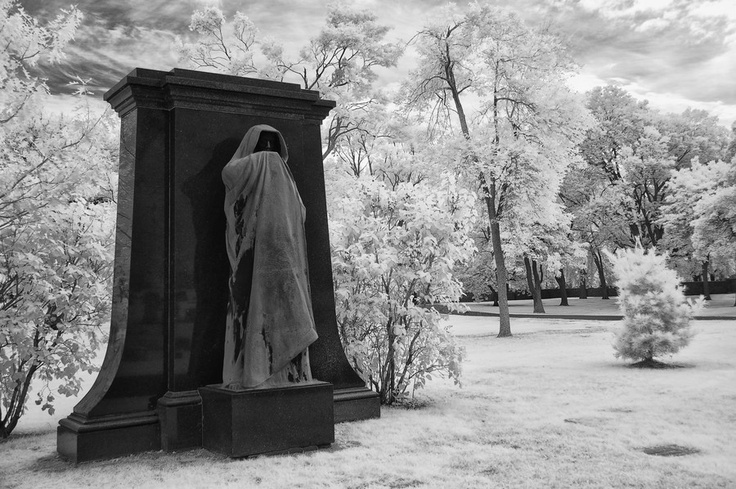
"I am not aware of the specifics, but there are a few hidden structures throughout Chicago; there is another in Washington Park. Old Graves essentially brought people into the area and made sure Chicago was built in a way that didn’t interfere with those Xahl’thari points of interest.”
“And what better way to do that than make sure they’re covered by graveyards and parks…” Laurence whispered.
Varek slapped him on the shoulder. “See, you’re catching on.”
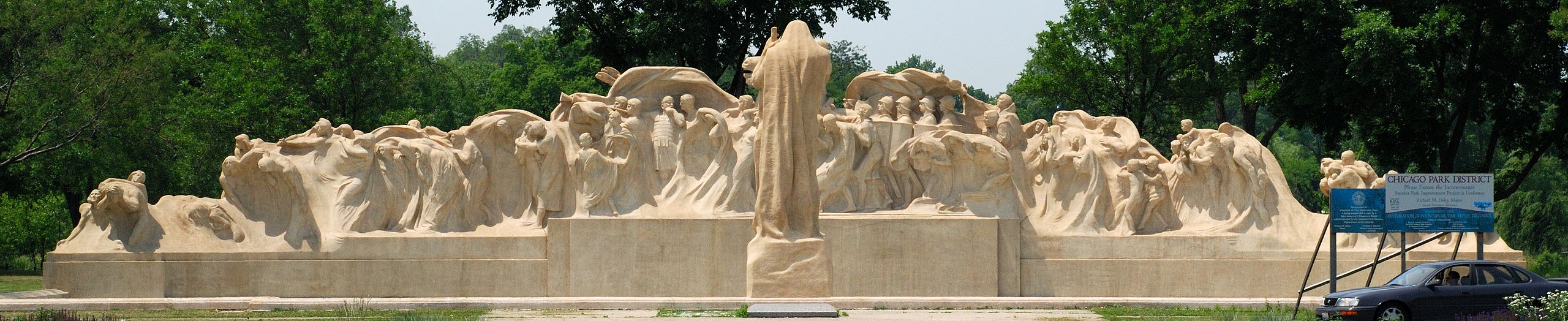
As with other statues, parks, and carefully chosen landmarks funded by the Graves family, Eternal Silence was placed with deliberate intent—to conceal and protect one of the hidden sites identified by the Xahl’thari. In this case, it stands sentinel above Kel’mat, an ancient subterranean city once inhabited by the Lumynar. Another monument of similar significance can be found within the grand Fountain of Time in Washington Park. Though publicly presented as a tribute—once even attributed to Graves’ beloved racehorse—our research, aided by the Temploscope, has revealed a different truth. That sculpture marks a second entrance to a Lumynar complex, carefully disguised beneath artistry meant to deter curiosity rather than invite it.
Interestingly, the figure of Henry Graves appears again within the Fountain of Time itself—nearly identical to the one cast in Eternal Silence. Whether this repetition was an intentional safeguard, a symbolic echo, or simply artistic interpretation by Taft remains unclear. What is certain, however, is that these monuments have endured—shielded not only by stone and bronze, but by time, misdirection, and the quiet dismissal of those who never thought to question them.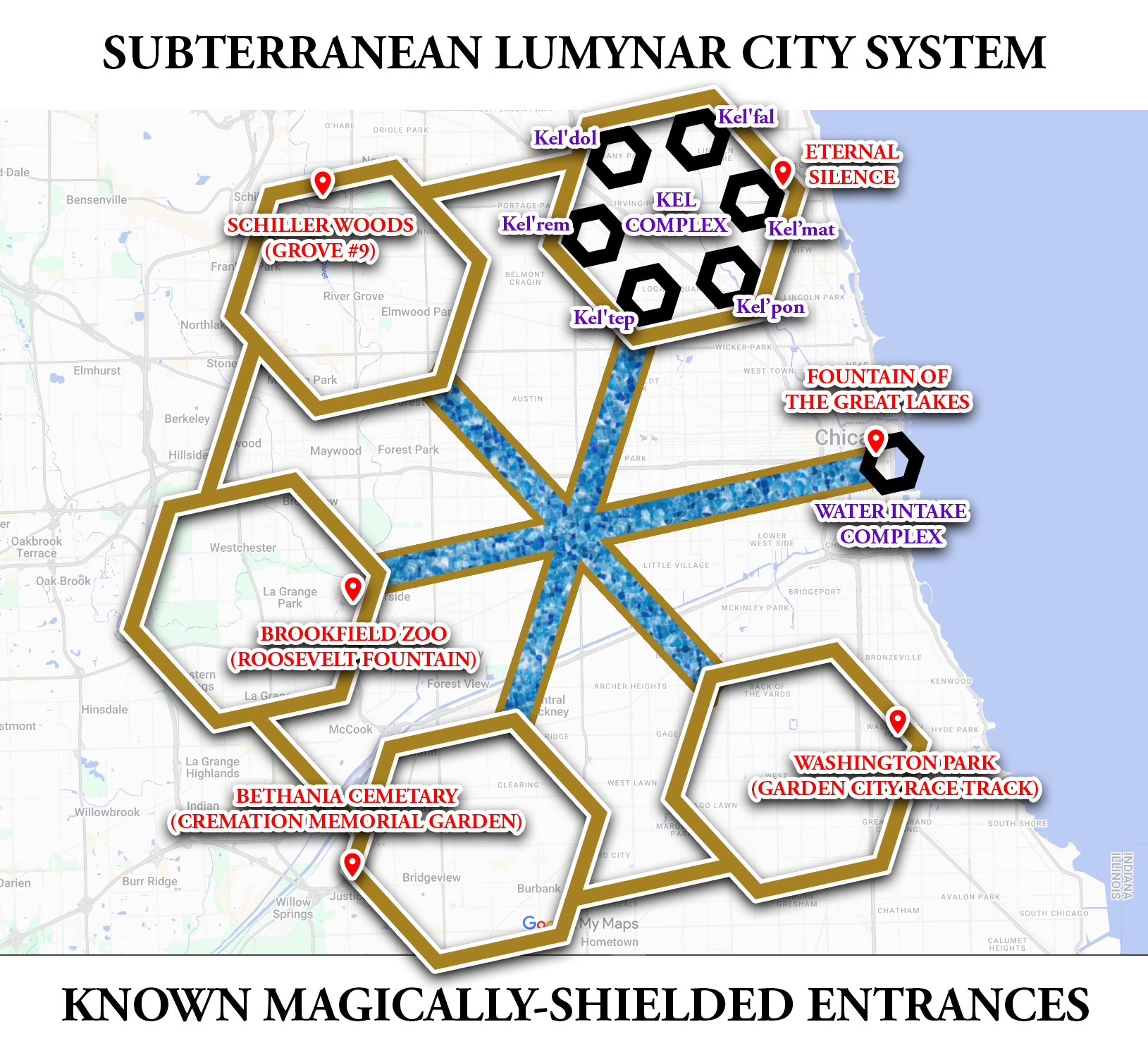

The official history of Henry Graves is, at best, fragmented. Records conflict. Details vanish. Historians have long attempted to piece together his life, often arriving at conclusions that feel incomplete or contradictory. Such confusion is hardly surprising. Without knowledge of humanity’s deeper Magical history—or Graves’ connection to the Xahl’thari—many truths remain just beyond their reach.
Fortunately, for those willing to look beyond the surface, not all knowledge has been lost. In the next installment of The Magical History Tour, we will delve deeper into the life of Henry Graves and the legacy of his family—uncovering their hidden role in safeguarding ancient power, and their ties to a past that refuses to remain buried.