

The Graves Family:
Preservers of Ancient History
As mentioned in our earlier installment of The Magical History Tour, the Graves family—most notably Dexter Graves and his son, Henry—played a quiet yet monumental role in safeguarding what little remains of humanity’s forgotten Magical past. Their names survive in fragments of recorded history, scattered and incomplete, their true purpose obscured beneath layers of mundane explanation. Yet the deeper one looks, the more apparent it becomes: their lives were not shaped by opportunity alone, but by intention.
And that intention began long before Chicago ever rose from the marsh.
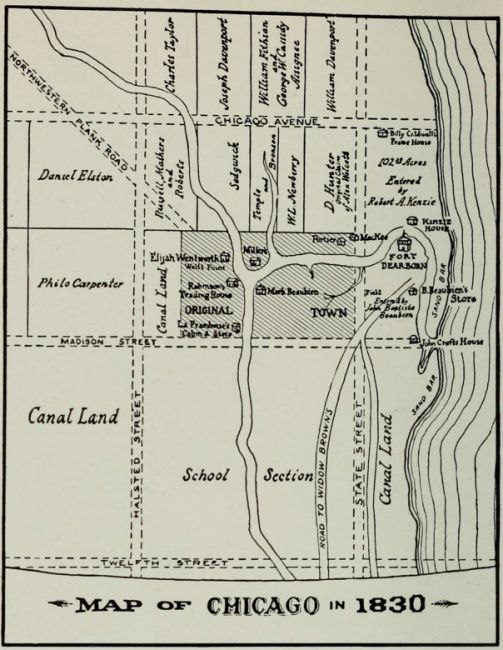
Dexter Graves, born in 1789, is remembered in conventional history as a pioneer—one of the earliest settlers to lead thirteen families from Ohio to what would later become Chicago in 1831. The official narrative suggests he was drawn by the promise of land, trade, and prosperity. But this account is… insufficient. Through careful study—and corroborated glimpses obtained via the Temploscope—it has become evident that Dexter’s journey was not one of ambition, but of retrieval. Years before setting foot in Illinois, Dexter had already begun locating fragments of Magical influence scattered across the continent. These were not artifacts in the traditional sense, but anchors—points where ancient Magic had once taken root and refused to fully fade. Each discovery narrowed his search, guiding him toward a convergence point buried beneath the wetlands of the Chicago River basin. The expedition he led was not merely a migration. It was a cover.
When Dexter and the families arrived, they found the land unsuitable—marshy, unstable, inhospitable. And yet, structures already stood waiting. Primitive structures, arranged with strange precision along the riverbank, as though placed not for comfort, but for alignment. Dexter understood immediately what lay beneath. Chicago had not been chosen. It had been marked. Far below the shifting earth and waterlogged soil rested the remains of an ancient Lumynar complex—Kel’mat, one of several subterranean cities constructed long before recorded human civilization. These cities were not abandoned ruins, but sealed environments, preserved by intricate magical systems designed to endure catastrophe, time, and even memory itself. But Dexter’s purpose was not to reveal Kel’mat. It was to ensure it remained hidden.
Much of Dexter’s early life remains inaccessible through conventional means. Records fade. Timelines blur. Even the Temploscope struggles to maintain clarity when tracing his origins—a phenomenon typically associated with individuals who do not fully belong to their native era. This, in itself, is telling. There is now little doubt that Dexter Graves was of Xahl’thari descent—not merely distantly, but closely enough to retain a functional connection to Magic. Unlike most modern descendants, whose abilities have diminished into intuition and instinct, Dexter appears to have wielded Elemental Magic with deliberate control. During the journey to Chicago, multiple anomalies were observed. Fires that refused to extinguish in driving rain. Vegetation sprouted in frozen or barren soil. Paths stabilizing beneath wagon wheels where no road existed. These were not coincidences. They were interventions.
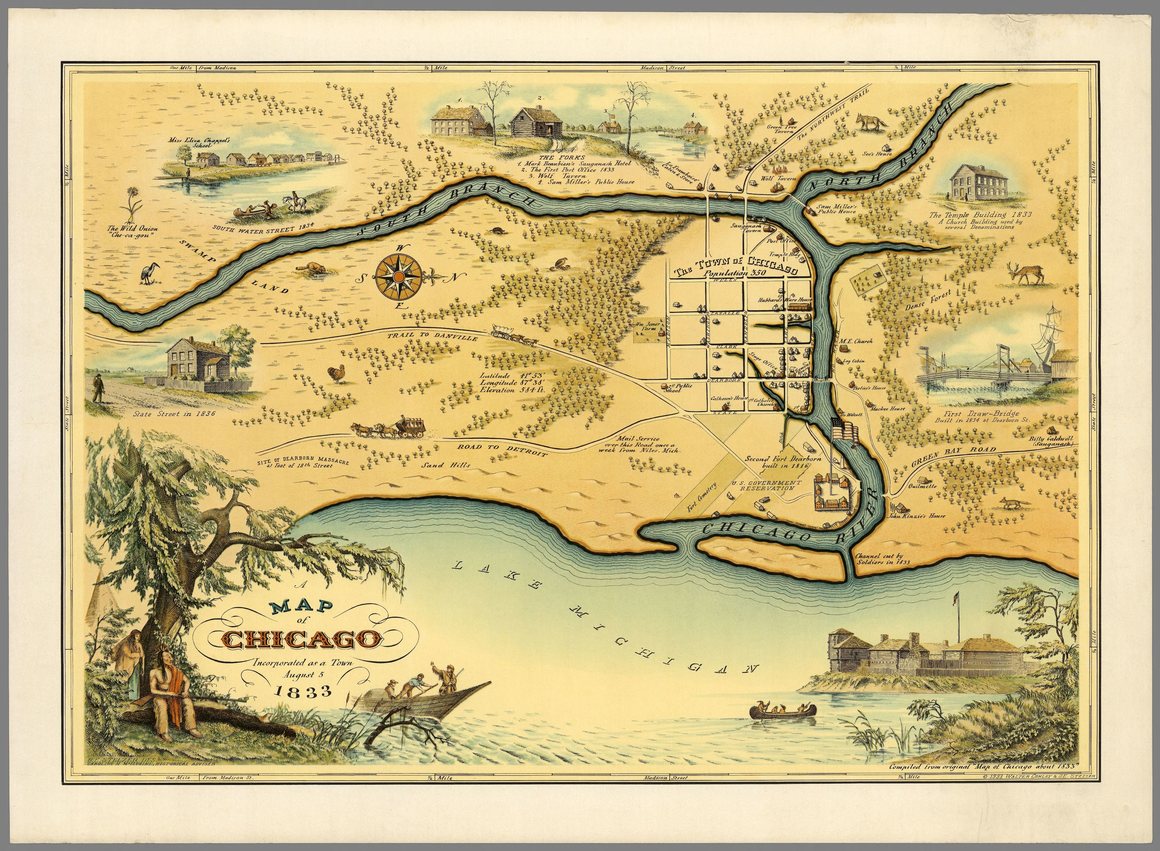
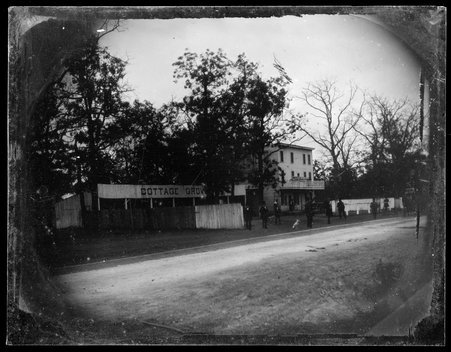
Dexter’s greatest achievement was not survival. It was design. By guiding settlers into the region and encouraging structured growth, he ensured that Chicago would not develop randomly, but in a pattern—subtle, nearly imperceptible, yet precise. Roads, buildings, and districts were influenced in ways that positioned key locations directly above Lumynar access points. Even the location of Dexter’s Mansion House hotel appears to have been chosen not for commerce, but for its proximity to one such node—though the exact structure beneath it remains… elusive. Dexter did not build a city. He built a barrier.
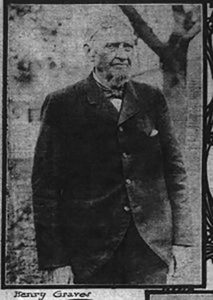
Following Dexter’s death in 1844, his son Henry inherited not only his wealth, but his purpose. Where Dexter had laid the foundation, Henry refined it. His affinity for Elemental Magic—particularly his ability to reshape land—allowed him to transform unstable terrain into controlled, usable space. Entire regions of Chicago were subtly altered under his influence, their geography adjusted to ensure the integrity of what lay beneath. His acquisition of vast tracts of land was not indulgent. It was strategic.
The Garden City Race Track, for example—long dismissed as an obscure and poorly documented venture—was positioned precisely over a convergence point between multiple Lumynar corridors. Its construction prevented excavation, industrial development, and structural intrusion in an area that would otherwise have been highly attractive for expansion. Even its eventual disappearance raises questions.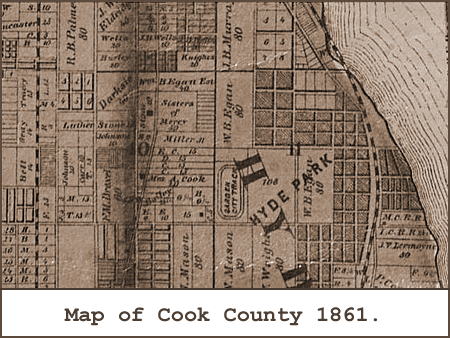
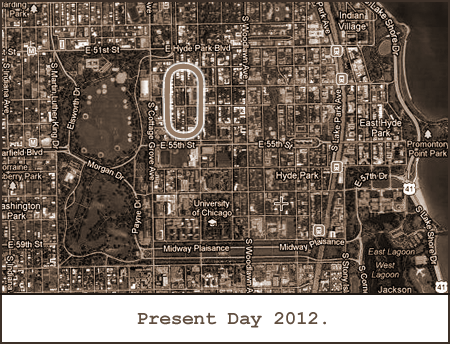
As Chicago grew, Henry adapted. Direct control over land became more difficult, but influence remained possible through public works—parks, cemeteries, statues. These were not merely aesthetic contributions, but protective measures, each carefully placed to obscure or stabilize a specific site. Among them include Eternal Silence, standing vigil above Kel’mat, The Fountain of Time, guarding a secondary Lumynar access point, and Various lesser-known parks and memorials, each occupying ground too “important” to disturb. These locations share a common trait. They are preserved. Untouched. Respected—even by those who do not understand why. This is no accident. It is a lingering effect of Xahl’thari influence—an echo of Magic that compels preservation where destruction might otherwise occur.
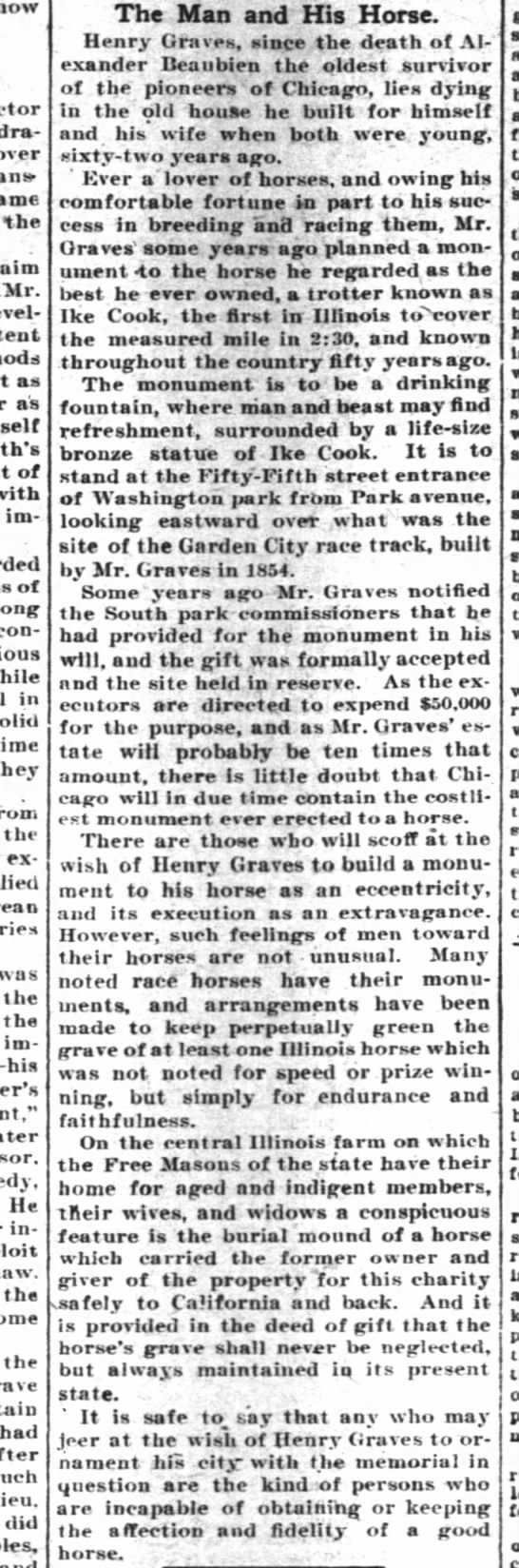
Henry Graves left no children. At first glance, this appears to be an unfortunate end to a lineage defined by purpose. But there are indications—subtle, difficult to confirm—that this absence may have been intentional. Whether the Lumynar systems had stabilized and the entrances had been sealed, or the responsibility had already been passed on in ways we do not yet understand, the need for active guardianship had diminished.
It is unfortunate that Henry Graves never had children, for we know in our heart they would have continued his mission and sought out more of our lost Xahl’thari history, but we are grateful for the hard work and dedication of the Graves family in protecting those few remnants of Magical origin. And, of course, I suppose we have to thank Varek’ehn as well, for without his actions - however nefarious they may have been - we would have never found the lost cities of the Lumynar, or learned the true history of this family of historical preservationists. To be honest, the Guild likely wouldn't exist at all. So, if you're reading this, Varek - which I'm sure you are - I suppose we owe you a thanks for your... contributions. However, do not take this sentiment as forgiveness or a condoning of your actions...
Today, Chicago stands as one of the great cities of the modern world—its streets busy, its skyline ever-changing, its history studied and celebrated. But beneath it all, unchanged and unseen, the Lumynar cities remain. Silent. Waiting.
And though the Graves family has faded into relative obscurity, their work endures in every preserved park, every untouchable monument, every space that feels… inexplicably important. History remembers them as pioneers, businessmen, and benefactors. But now you know the truth. They were something else entirely. They were architects of concealment.